Cat-Friendly Consultation: A Vet’s Approach to Stress-Free Feline Care
In a busy clinical day, the temptation is to “get the job done.” But with cats, the shortest route to a successful exam is often a slower start. My approach isn’t about rushing into a physical; it is about managing the sensory environment and respecting the specific biological triggers that turn a curious cat into a volatile patient. A cat-friendly consultation focuses on reducing stress through environmental control, gentle handling, and adapting the pace of the examination to the individual cat. Below is my step-by-step version of a cat-friendly consultation.
The Waiting Room Shield
I am not taking credit for this protocol. Most practices now work toward specific feline standards, delivered by the ISFM and ranging from Bronze to Gold. Often, receptionists will offer a blanket sprayed with pheromones to drape over the carrier.
This serves a dual purpose: it creates an olfactory shield and, more importantly, it blocks visual contact with other animals. A cat that cannot see the “threats” around it enters the consulting room with far lower stress levels.
The Decompression Phase
Regardless of preparation, a trip to the vet remains a sensory assault. Between the car journey, the noises in the waiting room, and the stress of previous experiences, most cats arrive in “survival mode.” Their heart rate is up, their pupils are dilated, and their cortisol levels are peaking.
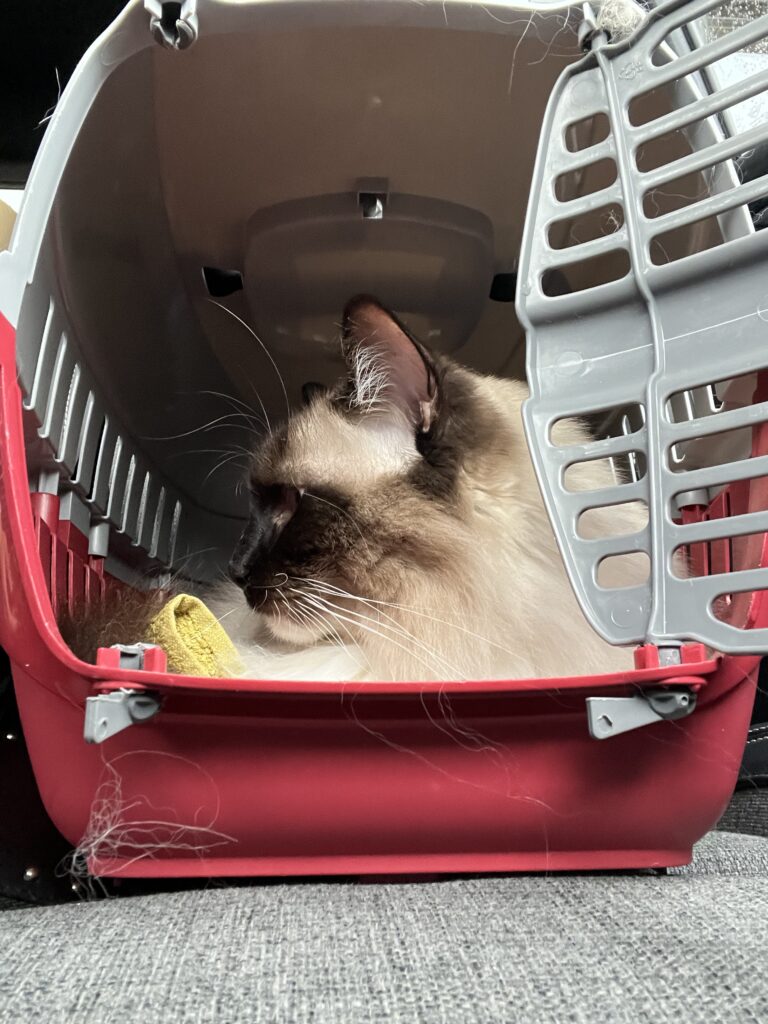
When they enter my consultation room, the first thing I do is give them a moment to settle. Except for confident cats or young kittens who generally hate the “kitty jail,” very few cats are eager to come out of the carrier. I encourage owners to leave the carrier on the table with the door closed for a few minutes. This gives me time to open the patient file, get acquainted with the guardian, and perform a quick assessment of the cat’s body language while they are still in their safe space.
I start the interaction with gentle, brief visual contact and talk to them in a calm, reassuring voice throughout the process, explaining my next move. While some might think this sounds unnecessary, cats are highly tuned to tonal frequency. By the time I finally open the carrier, I want the cat to feel that I am not a threat.
The Cat-Friendly Consultation: the “Snack Test”
I never drag a cat out of their carrier. Instead, I use what I call a “snack test” to gauge their stress levels. My current preference is Feliway snacks as they are highly palatable and infused with calming compounds that work very quickly. If the cat takes the treat, it provides a dual benefit: a savoury distraction and a calming agent. This builds trust and entices the cat to explore the table. have explored cat anxiety and the role of calming support in more detail here.
Some cats will refuse the treat or refuse to venture out altogether. In these cases, I adjust my behaviour. I will remove the top of the carrier when possible and gently make contact with them. If they are still nervous, hiding, or trying to bury themselves under their bedding, I will examine them in the carrier. If they are comfortable being moved to the table, I often use the front of my body and the crook of my elbow or a soft towel wrap—the “purrito”—to provide maximum body contact and a sense of security.
Clinical Efficiency and the “Hard Stop”
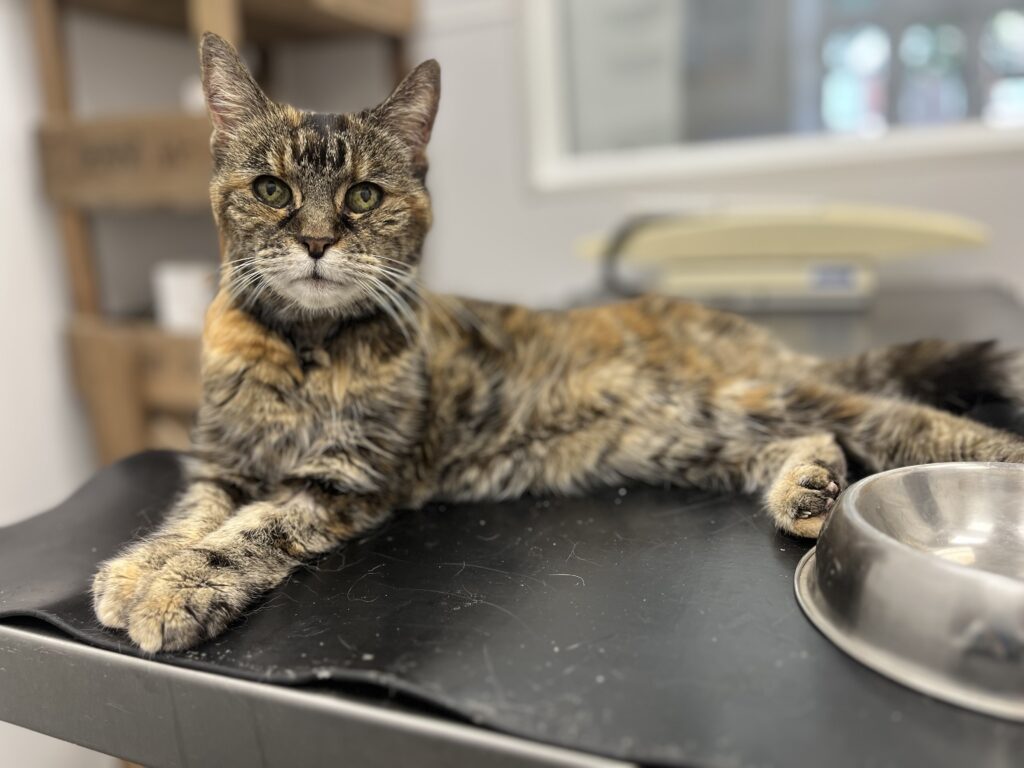
To minimise the time a cat spends under tension, I prepare everything beforehand. All injections, quiet clippers, and sampling kits are ready before the cat even leaves the carrier. Meanwhile, I constantly read their body language and facial expressions to get a “feel” for their threshold. If I sense a cat is reaching its limit, I prioritise the most essential part of the exam immediately.
For blood sampling, I impose a strict cat-friendly environment: a quiet room with no through-traffic, no sudden noises, and gentle handling. If the cat is relaxed and interested in snacks, I prioritise distraction over physical restraint. In feline medicine, “less is more.” I also routinely use a local numbing agent at the site of venipuncture to remove the “sting” of the needle.
But sometimes, despite the royal feline treatment, the process fails. I have no shame in bailing as I refuse to fight with a cat. If their stress threshold is crossed and they become too distressed to be handled safely, I will stop. I would much rather prescribe a pre-visit pharmaceutical like Gabapentin and reschedule than force a cat through a traumatic experience. Their long-term mental health is just as important as their physical examination. See here how I handled my own cat’s visit to the dentist.
The Invisible Room
I am a firm believer that the “ghosts” of previous patients can ruin a cat consult. If a cat is aggressive by default or “on the back foot,” I immediately look at the room’s history. Residual pheromones from a frightened dog or an earlier feline can prime a cat for a fight-or-flight response before I’ve even touched them. Proper environmental neutralisation is as important as the exam itself.
The Vet Nook Verdict: Why the Wait Matters
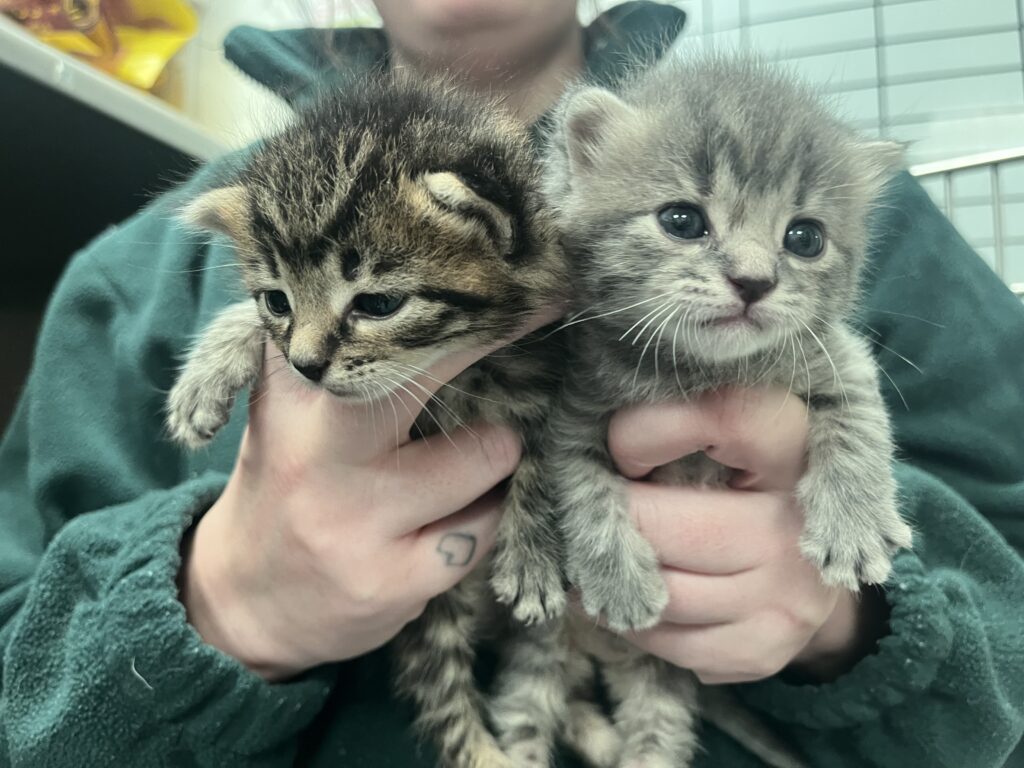
This patient-led approach might take an extra five minutes, but it is the best investment I can make. This cat-friendly approach allows me to see the “real” cat, not just a ball of fear, and it ensures that the next time they visit the clinic, they aren’t starting from a place of trauma. Moving at the pace of the patient is not just a preference; it is a higher standard of care.
Throughout my career, my approach has been significantly refined. I will be the first to admit that for a long time, I was not as well-versed in feline handling as I am today. Shockingly, true feline medicine is a relatively recent concept. For far too long, cats were studied and handled as though they were simply “small dogs.” They have been misunderstood for decades because of this comparative bias.
However, the shift toward species-specific care has changed everything. When approached with respect, patience, and an understanding of their unique biology, it is extraordinarily rewarding to see how much a cat can trust and cooperate. We aren’t just treating a patient; we are building a lifelong relationship based on safety.